Clare Jarrett Autumn 2025
This writing describes my most recent ongoing project, Jasminoides. It is an Arts Council supported bronze casting residency at Walnut Works, Suffolk. It also describes much of my approach to sculpture making.
“For the Jasminoides residency (2025-ongoing) I spend time looking closely at things in my garden, drawing, making notes. Deadheading, snipping, rethinking and noticing small changes.
Last year I pruned a jasminoides. It’s a climber that needs support and doesn’t like to be pruned, I read later. The plant, on a south facing wall, clambers up, is still flowering intermittently though it’s late in the year.
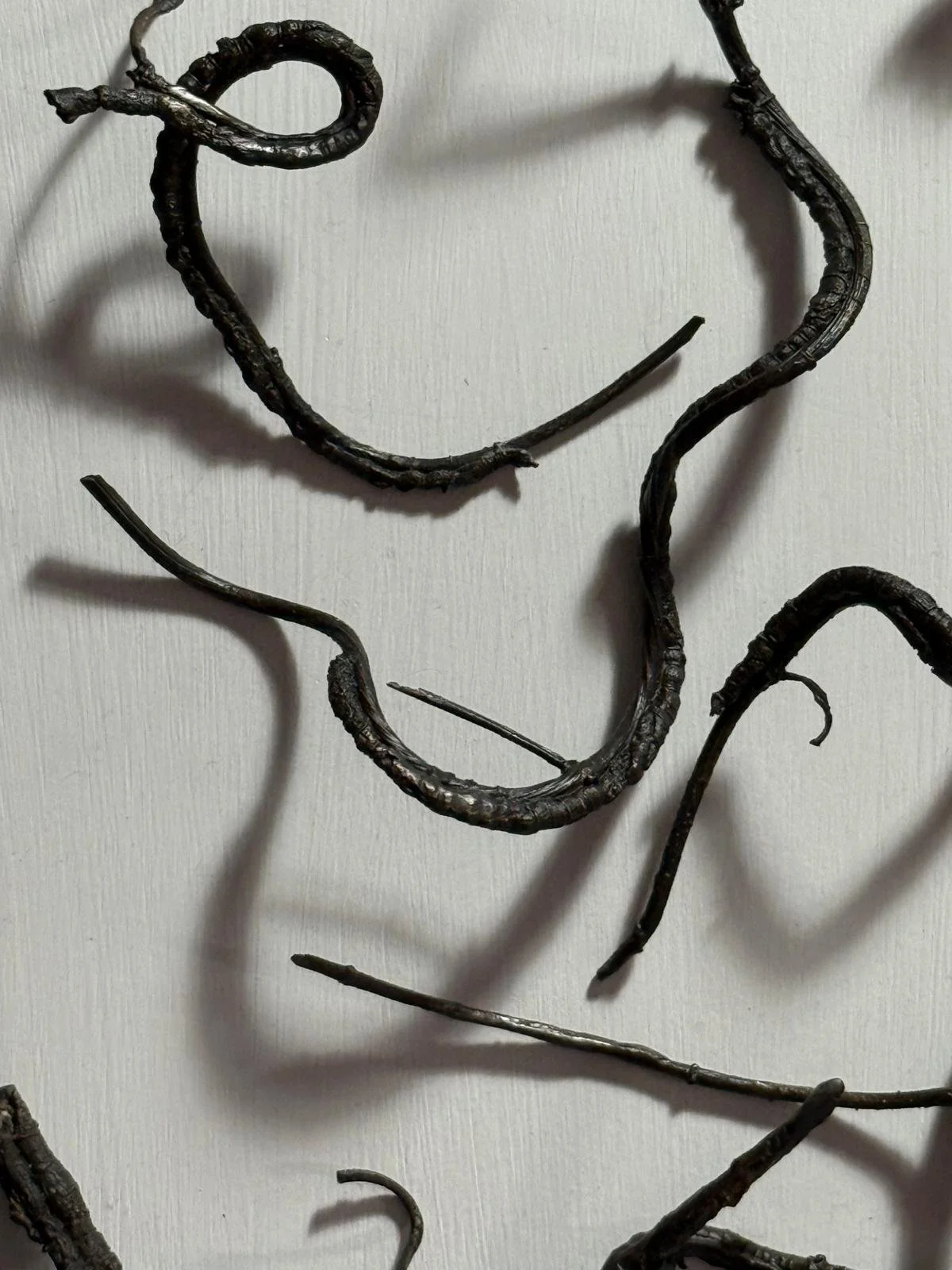
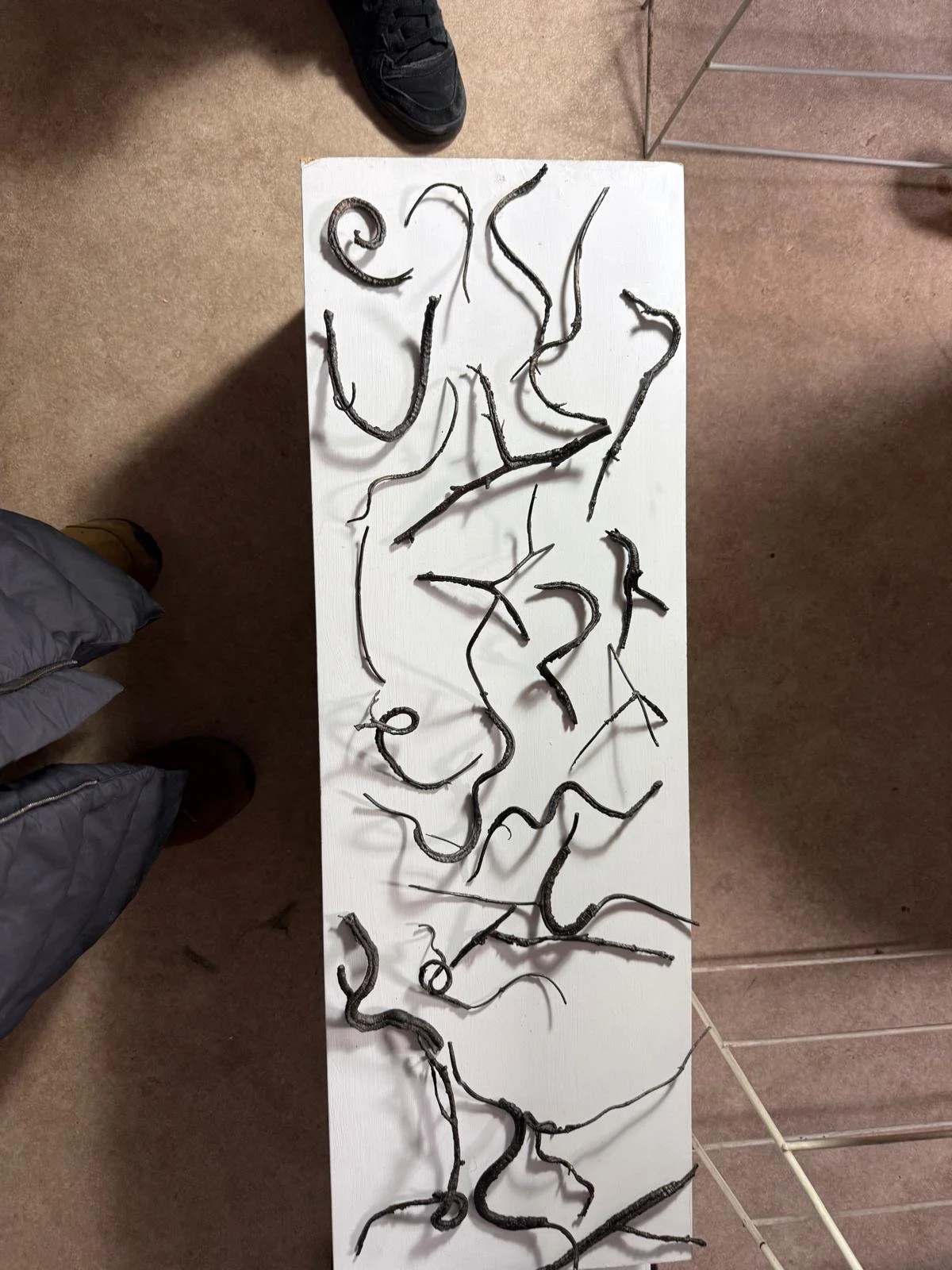
I kept the prunings. I didn’t know why but recognised my need to do so, and was panicked when it was suggested these branches should be burned. They are beautiful, like 3D drawings, made outside me, free and curving and of themselves.
I love them and keep them safely hidden away in a cardboard box.
The climber is a cutting from my aunt’s garden in Italy, brought home in a plastic bag. I planted it in an ideal spot, and watched it carefully. Slow to get going, it thrives now. I sit nearby with my cup of tea, and think about her and how she died far too young. We liked and respected each other with that family tie of similarity though she was always a country away. She and her husband lived for a time in Mogadishu, then Greece, then Italy, my cousins had exotic pets and sun blond hair. We hardly ever saw them. We met for an hour or two every few years at a London Hotel as they passed through. I never asked why they didn’t come to stay. Nobody ever did. They had money and US citizenship. None of this is really relevant to the project except that sense of loss and of generations passing through. Tenuous connections with family, with other people and places.
The other element in the work is merino wool, saved from my partner’s threadbare base layer, worn close to his body for years, giving him warmth and taken on his long journeys. The woollen clothing has been looked after. My hands have washed and dried it, mended, folded and put it away over many years.
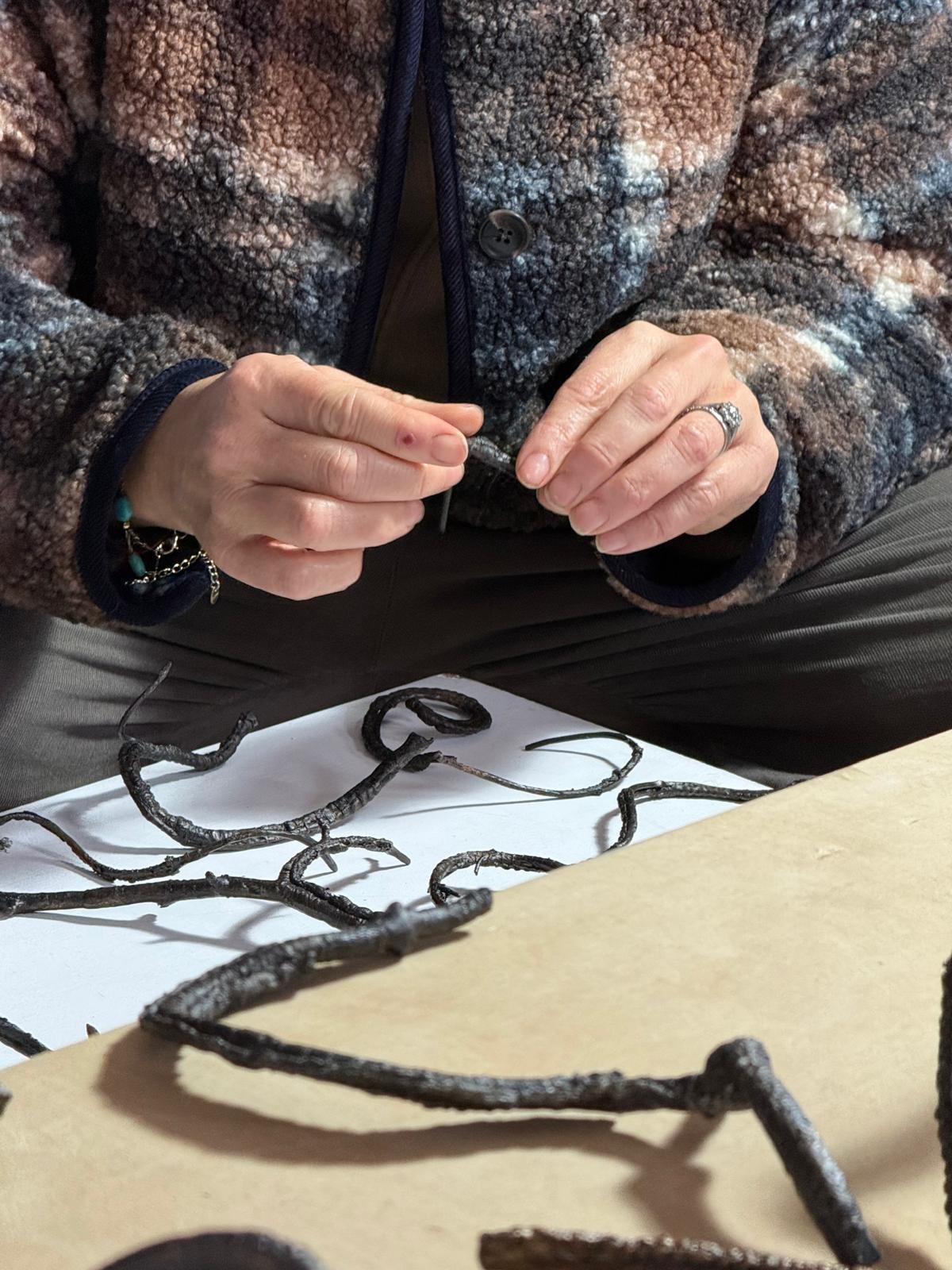
I form it into long rolled shapes, bound and knotted, then place them onto the prunings. The wool moulds along the curving, twisting branches and then is attached by binding threads around both. I want care and attentiveness to be realised in the wool lying alongside the wood, echoing the warmth of the body. And how the threads, lightly binding and knotting, hold these elements together.
There’s a sense of the outside, the garden, being brought in and connected to the studio here. A sense of the grown garden joining on, attaching to the people who work it. Thinking about the time it takes the plant to grow and the time it takes for clothes to wear out.
Attached to the branch the wool becomes animal-like, camouflaged, visible and yet difficult to see. It uses a kind of mimicry, hiding from a predator perhaps…or from a viewer. This resonates with me, the idea of fitting in, pretending to be a branch too. Wanting to be like everyone else.
The combined, connected objects are vulnerable. The branches are rigid, and snap easily, and the woollen fabric is pliable, fitting to the shape of the wood. They are highly combustible and delicate. Having been saved from the domestic fire earlier, the casting process demands that the objects be consumed, burnt out.
These fragile parts are attached to a central reservoir, runners and risers added which later will take metal in and air out, and the whole is enclosed in a luto crust, the shape of an enormous egg. This plaster shell is put into a kiln and baked at a high heat so the insides burn away. The bronze is heated to red hot, the metal is liquid as it is poured into the mould.
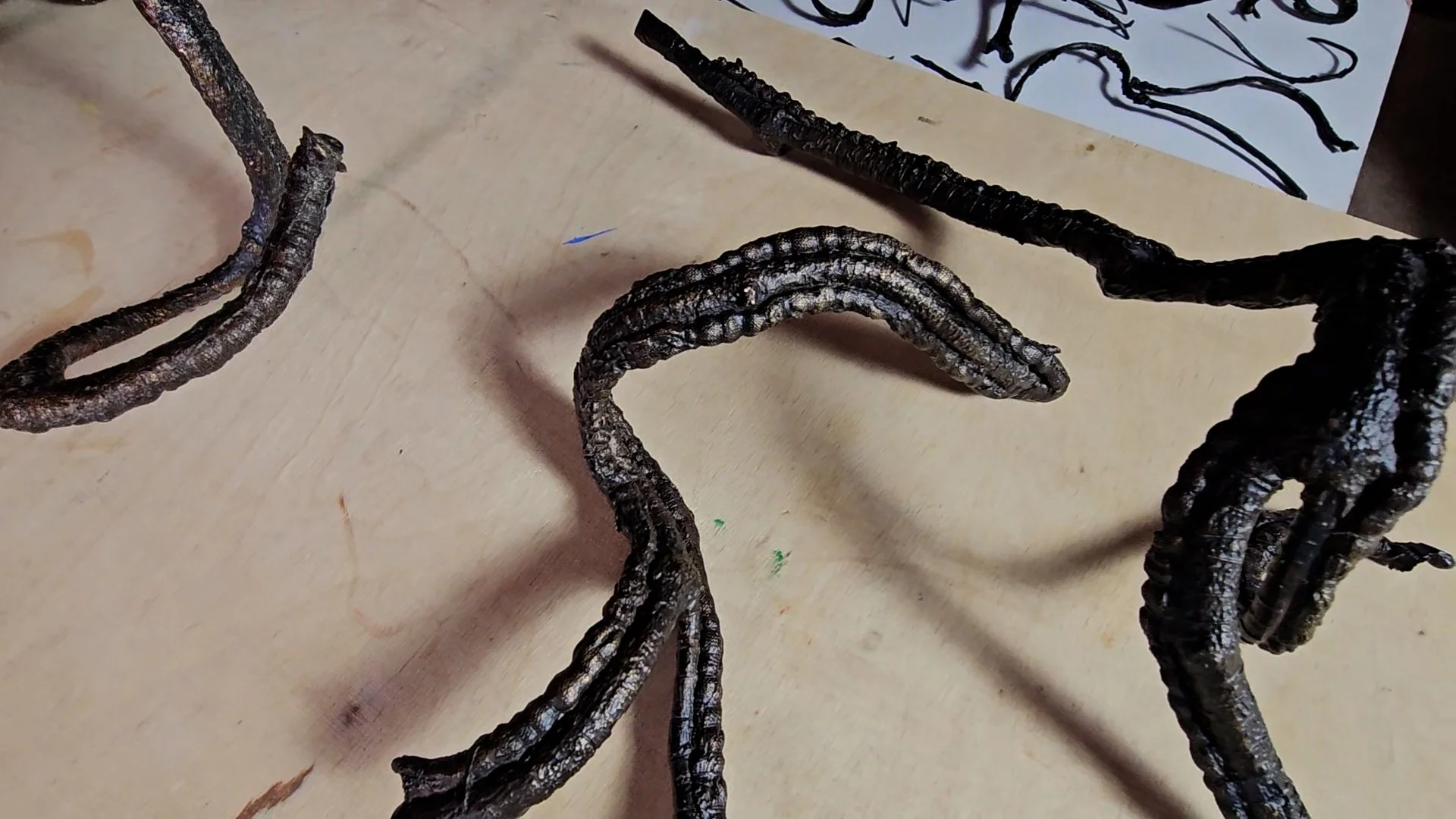
Molten metal replaces the original. It fills their spaces and produces new work. They are different objects. The feel of the surface changes, the metal soon becomes cool to the touch. The pieces hold the same stories along with additional ones about the processes of its making.
I think of the metamorphosis that takes place in the life of a honeybee. The egg, laid in the bottom of a polished cell grows into a larva which is then sealed inside the cell. The larva becomes liquid before transforming into an adult bee.
Through the bronze casting process the objects become strong, unbreakable and long lasting. The weight is different. The work has a new feeling of substance, a presence. These objects can be held, turned in the hands, with no ‘right’ or ‘wrong’ way up.”